
Resources Library
Find practical tools, guides, and specialized content to strengthen digital initiatives in sexual and reproductive health.
This space brings together resources designed to support Member Associations in creating, implementing, and improving digital solutions that are more accessible, sustainable, and people-centered.
Resource Type
Wearable intelligence: can we transform fertility tracking through digital innovation?
A report on the March 2025 ESHRE journal club discussion, published on 5 August 2025 in Human Reproduction. This is not a primary study: it comments on a study by Wang and colleagues (2025) of wrist-worn temperature-measuring devices to predict ovulation and...
Market-testing a smartphone application for family planning: assessing potential of the CycleBeads app in seven countries through digital monitoring
A digital health study in family planning evaluating CycleBeads, a mobile application that digitises the Standard Days Method, a modern fertility-awareness method using only the start date of menstruation. The app can be used to prevent or plan pregnancy and to track...
Innovative Approaches to Menstruation and Fertility Tracking Using Wearable Reproductive Health Technology: Systematic Review
A systematic review published in February 2024 of wearable devices developed and evaluated to track menstrual cycles and predict fertility. It examines a technological shift: health apps that relied on manual cycle logging are giving way to devices measuring...
Effectiveness of zipline’s drones’ delivery service in improving postpartum hemorrhage (PPH) management and reducing its related mortality and morbidity: A retrospective cross-sectional survey in Rwanda
A retrospective cross-sectional study comparing the management of postpartum haemorrhage before and after the introduction of Zipline’s drone-based blood and medicines delivery service in Rwanda. It was published as a preprint on Research Square in February 2026 and...
Can Drones Help Avert Contraceptive Stockouts? Maybe…
An analysis article by the Population Reference Bureau, published on 8 November 2018, critically examining whether drones can prevent contraceptive stockouts in low-income countries. It mentions a 2016 contraceptive drone-delivery pilot in Ghana funded by UNFPA and...
Get It Together (Nigeria): a social media family planning campaign
Get It Together (GIT-NG) is a family planning communication campaign that shared messages on Facebook, Twitter, Instagram, YouTube and LinkedIn in Nigeria. According to the abstract, it achieved 9,916,976 impressions in one year, with YouTube providing the greatest...
Social Marketing for Family Planning Products and Services (High Impact Practices)
A technical brief synthesising available evidence on social marketing for family planning products and services aimed at behaviour change. The High Impact Practices in Family Planning (HIPs) Partnership, a USAID-supported consortium involving WHO, in 2025 and...
Virtual Hub for SRHR Promotion (Magara Plus prototype)
This resource presents Magara Plus, a digital platform prototype promoted by IPROSARUDE in Burundi in 2020 with funding from a small Share-Net International grant. It aims to position young people as active participants in their own sexual and reproductive health...
EMI, a chatbot supporting adolescents and families on sexual health, care and relationships
EMI is a WhatsApp chatbot offering informative, anonymous and non-judgemental conversations for adolescents, as well as their families and carers. It was created by UNFPA Argentina and Fundación Kaleidos, with an interdisciplinary team of specialists in health,...
COVID-19 IPPF Innovation and Best Practice: Telemedicine Abortion Care (Ireland)
This case documents how the Irish Family Planning Association (IFPA) moved medication abortion care to a telemedicine model during the COVID-19 pandemic in Ireland. The pathway combines telephone or video consultation, delivery of medicines by post or collection from...
COVID-19 IPPF Innovation and Best Practice: Digitalising for Young People (Estonia)
This case documents how the Estonian Sexual Health Association (ESHA) moved its comprehensive sexuality education programme entirely online during COVID-19 school closures in Estonia. Sessions were delivered through Zoom, with Amaze animations and interactive Jamboard...
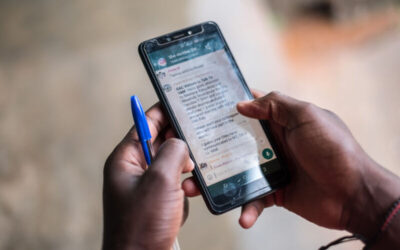
Infographic ABC: Why use AI-Powered WhatsApp chatbots for Sexual and Reproductive Health Services
Visualiza los pasos clave para diseñar e implementar asistentes virtuales con IA en servicios de salud sexual y reproductiva, desde la definición del problema y la validación de contenidos hasta la seguridad, la privacidad, la derivación a apoyo humano y la mejora...